

Bipolar Symptoms in Women: Understanding Signs & Treatment
This article aims to explore the nuances of bipolar symptoms in women, delving into the various factors that contribute to this disparity.
Editor Yamilla Francese
Clinically Reviewed by Lauren Barry, LMFT, MCAP, QS
Medically Reviewed by Ali Nikbakht, PsyD
Updated on May 18, 2026 — Editorial Policy | Research Policy
Bipolar symptoms in women can feel confusing, scary, and hard to manage alone. Many women live for years without knowing their mood swings are signs of a treatable illness. Bipolar disorder in women often looks different from how it does in men. These gender differences that bipolar experts study can change how symptoms appear and how care should be given.
At We Level Up Tamarac FL, we help women find answers, balance, and hope. Our team understands female bipolar disorder signs and offers kind, expert care in a safe place. You are not alone, and real healing is possible with the right support.
Table of Contents
Get Help. Get Better. Get Your Life Back.
Searching for Accredited Dual Diagnosis Mental Health Centers Near You?
Even if therapy failed previously, or are in the middle of a difficult crisis, we stand ready to support you. Our trusted behavioral health specialists will not give up on you. When you feel ready or just want someone to speak to about counseling alternatives to change your life call us. Even if we cannot assist you, we will lead you to wherever you can get support. There is no obligation. Call our hotline today.
FREE 24/7 Dual Diagnosis Mental Health Services HotlineWhat Are Bipolar Symptoms in Women?
Bipolar symptoms in women are strong mood changes that affect feelings, thoughts, and daily life. These mood shifts are more intense than normal ups and downs. A woman may feel very happy, full of energy, and unable to sleep for days. This high mood is called mania, and it can lead to fast talking, risky choices, or poor judgment.
After mania, the mood can swing to deep sadness. During this time, she may feel tired, empty, or hopeless. It may be hard to get out of bed or enjoy simple things. Bipolar disorder in women can also include worry, anger, and sleep problems, and some women have more low moods than high ones.
Hormone changes during pregnancy or menopause may affect symptoms in some women. These gender differences bipolar experts study help doctors choose the right care. The National Institute of Mental Health reports that about 2.8% of adults in the United States have bipolar disorder each year. With the right diagnosis and support, bipolar symptoms in women can be treated and managed.
Bipolar Disorder Facts
Bipolar Disorder
- Mood Episodes: Characterized by distinct episodes of mania/hypomania and depression.
- Duration: Mood episodes can last for days, weeks, or months.
- Triggers: Episodes can occur without external triggers, and mood shifts are often unrelated to specific events.
- Self-Image: Individuals typically have a stable sense of self and identity.
- Impulsivity: Impulsive behaviors may occur during manic episodes.
- Treatment: Mood-stabilizing medications are often prescribed, along with psychotherapy.
Types of bipolar disorder
There are several types of bipolar disorder, including:
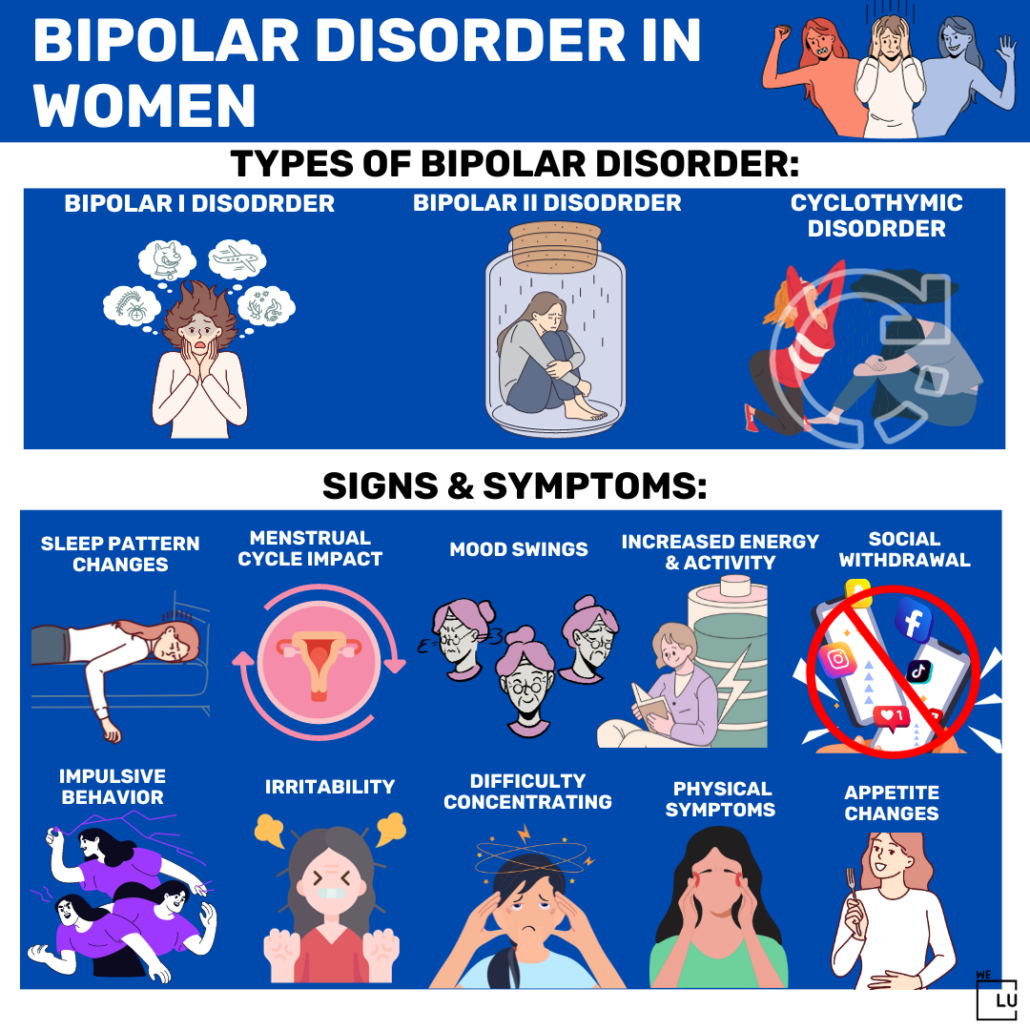
- Bipolar I disorder: Characterized by manic episodes lasting at least seven days or severe manic symptoms requiring immediate hospitalization.
- Bipolar II disorder: Involves a pattern of depressive episodes and hypomanic episodes, but not full-blown mania.
- Cyclothymic disorder: Marked by numerous periods of hypomanic and depressive symptoms that last for at least two years (one year for children and adolescents).
Symptoms
The symptoms of bipolar disorder vary depending on the mood episode:
- Manic episodes: Elevated mood, increased energy, racing thoughts, impulsivity, decreased need for sleep, excessive talking, grandiosity, and risky behavior.
- Hypomanic episodes: Similar to manic episodes but with less severity and a shorter duration.
- Depressive episodes: Persistent sadness, loss of interest or pleasure in activities, changes in appetite and sleep patterns, fatigue, feelings of guilt or worthlessness, difficulty concentrating, and thoughts of death or suicide.
Impact on daily life
- Bipolar disorder can significantly impact various aspects of a person’s life, including relationships, work or school performance, and overall quality of life. However, with proper treatment and support, individuals with bipolar disorder can manage their symptoms effectively and lead fulfilling lives.
Understanding Bipolar Disorder PDF Download
Signs You May Need Bipolar Treatment
- Extreme mood swings lasting days or weeks
- Very high energy with little sleep
- Deep sadness or hopeless feelings
- Risky behavior during high moods
- Trouble focusing or making choices
- Sudden anger or irritability
- Thoughts of self-harm or suicide
These signs of bipolar symptoms in women should never be ignored. Early care can prevent serious problems at home and work.

End the Emotional Pain. Get Your Life Back.
Feeling Depressed, Anxious or Struggling with Mental Health Illness? Get Safe Comfortable Mental Health Dual Diagnosis High-Quality Therapy From Counselors That Care. Begin Your Recovery Now.
Hotline (855) 940-6125Why Choose We Level Up Tamarac FL for Women’s Bipolar Treatment?
At We Level Up Tamarac FL, we specialize in bipolar symptoms in women and dual diagnosis care. Many women also face anxiety or substance use issues at the same time. Our team treats both mental health and addiction together. This full approach supports true and lasting healing.
Our licensed therapists understand female bipolar disorder signs and hormonal changes. We offer psychiatric care, medication management, and daily therapy sessions. Each woman receives a personal care plan built for her needs. Bipolar disorder in women requires careful and ongoing support.
We are proud to serve families in Tamarac and nearby Florida communities. Our center provides a calm and private space for recovery. Gender differences that bipolar experts recognize guide our care model. Women feel heard, respected, and safe while healing here.
Ready to get started? Call (888) 606-5120 or email verifyadmissions@welevelup.com today. A better life is waiting for you.
What to Expect During Women’s Bipolar Treatment?
Treatment for bipolar symptoms in women starts with a full mental health check. A doctor or therapist will ask about mood changes and sleep habits. They will also ask about past health problems and family history. This helps them understand what is really going on.
The provider may ask when the mood swings first began. They may ask how long the high and low moods last. Some women fill out simple forms about feelings and behavior. This step helps confirm bipolar disorder in women and rule out other problems.
After the checkup, a care plan is made. This plan is built just for her needs. Some women may need medicine to help balance moods. Mood stabilizers can lower strong highs and deep lows.
Therapy is also an important part of care. Women may meet one-on-one with a therapist each week. They may also join small group sessions with others. In these sessions, they learn ways to cope with stress.
Therapy teaches simple tools for daily life. Women learn how to spot mood changes early. They practice healthy sleep habits and calm breathing skills. These small steps can make a big difference.
Ongoing care helps prevent relapse. Women learn how to track moods in a journal or app. Family members may join some sessions for support. With steady care and kindness, bipolar symptoms in women can be managed and controlled over time.
First-class Facilities & Amenities
World-class High-Quality Mental Health Services & Behavioral Health Substance Abuse Treatment
Rehab Centers TourRenowned Mental Health Centers. Serene Private Facilities. Inpatient Rehab Programs Vary.
Mental Health Helpline (855) 940-6125Proven recovery success experience, backed by a Team w/ History of:
15+
Years of Unified Experience
100s
5-Star Reviews Across Our Centers
10K
Recovery Successes
- Comprehensive Dual-Diagnosis Treatment
- Complimentary Family & Alumni Programs
- Coaching, Recovery & Development Events
- Comfortable Onsite Medical Detox Center
Benefits of Bipolar Treatment
- Stable moods and clearer thinking
- Better sleep and daily routines
- Improved family and work relationships
- Lower risk of substance abuse
- Personalized mental health care plans
- Ongoing relapse prevention support
Professional care for bipolar symptoms in women can truly change lives.
How to Get Started with Bipolar Treatment?
If you or someone you love struggles with bipolar symptoms in women, help is close. We Level Up Tamarac FL offers caring and private support today. Our admissions team can verify insurance and answer your questions quickly. You deserve clear answers and real solutions now.
Ready to get started? Call (954) 420-6627 to speak with our team. Visit us at 8290 N University Dr Tamarac, FL 33321. Email us at verifyadmissions@welevelup.com for fast help. Healing begins with one brave step forward.
World-class, Accredited, 5-Star Reviewed, Effective Mental Health Dual Diagnosis Programs. Complete Integrated Inpatient Rehab with Free Post Discharge Therapy Planning.
CALL (855) 940-6125End the Emotional Pain Rollercoaster. Gain Stability & Happiness Through Recovery Treatment. Start Mental Health Counseling Today. Get Free No-obligation Guidance by Behaviroal Health Specialists Who Understand Mental Health Recovery.
FAQs About Bipolar Symptoms in Women
1. What are common bipolar symptoms in women?
Common bipolar symptoms in women include mood swings between mania and depression. Women may feel very energetic, talk fast, and sleep little during mania. During depression, they may feel hopeless, tired, and lose interest in life. Hormonal shifts can also affect symptom patterns.
2. Are female bipolar disorder signs different from those of men?
Yes, female bipolar disorder signs can look different from those in men. Women often have more depressive episodes and rapid mood cycling. They may also experience symptoms linked to pregnancy or menopause. These gender differences bipolar specialists study help guide better treatment.
3. Can bipolar disorder in women be treated?
Yes, bipolar disorder in women is treatable with therapy and medication support. Mood stabilizers and counseling can reduce symptoms and prevent relapse. Early diagnosis improves long-term results. Many women live full and balanced lives with proper care.
4. What causes bipolar symptoms in women?
The exact cause of bipolar symptoms in women is not fully known. Experts believe genetics, brain chemistry, and stress play major roles. Trauma and substance use may also worsen symptoms. A full mental health evaluation helps find personal risk factors.
5. When should I seek help for bipolar symptoms in women?
Seek help if mood swings affect work, school, or relationships. Immediate help is needed if there are thoughts of self-harm. Early treatment can prevent serious emotional and physical harm. Professional care offers safety, clarity, and hope.
6. Does insurance cover the treatment of bipolar symptoms in women?
Many insurance plans cover treatment for bipolar symptoms in women. Coverage may include therapy, medication visits, and inpatient programs. Our admissions team can verify benefits quickly and explain your options. Financial concerns should not stop you from seeking care.
Experience Transformative Recovery at the We Level Up Treatment Center.
See our authentic success stories. Get inspired. Get the help you deserve.
Start a New Life
Begin with a free call to a behavioral health treatment advisor. Learn more about our dual-diagnosis programs. The We Level Up treatment center network delivers recovery programs that vary by each treatment facility. Call to learn more.
- Personalized Care
- Caring Accountable Staff
- Comfortable Amenities
- Licensed & Accredited
- Renowned w/ 5-Star Reviews
We’ll Call You
8 Steps & Tips for Maintaining Your Mental Wellbeing Informative Video
Video Script
We at We Level Up FL are dedicated to personalized mental health services tailored to each person’s unique needs. Our experienced team collaborates closely with clients to create therapy programs that address their challenges and align with their goals. With empathy and support, we empower individuals to take an active role in their mental health journey by providing tools and strategies. We encourage exploration, self-discovery, and growth in a safe and nurturing environment. We understand that everyone is different, so we listen attentively and develop customized therapy plans based on individual concerns, strengths, and aspirations.