

Difference Between Bipolar 1 and 2: Symptoms & Treatment
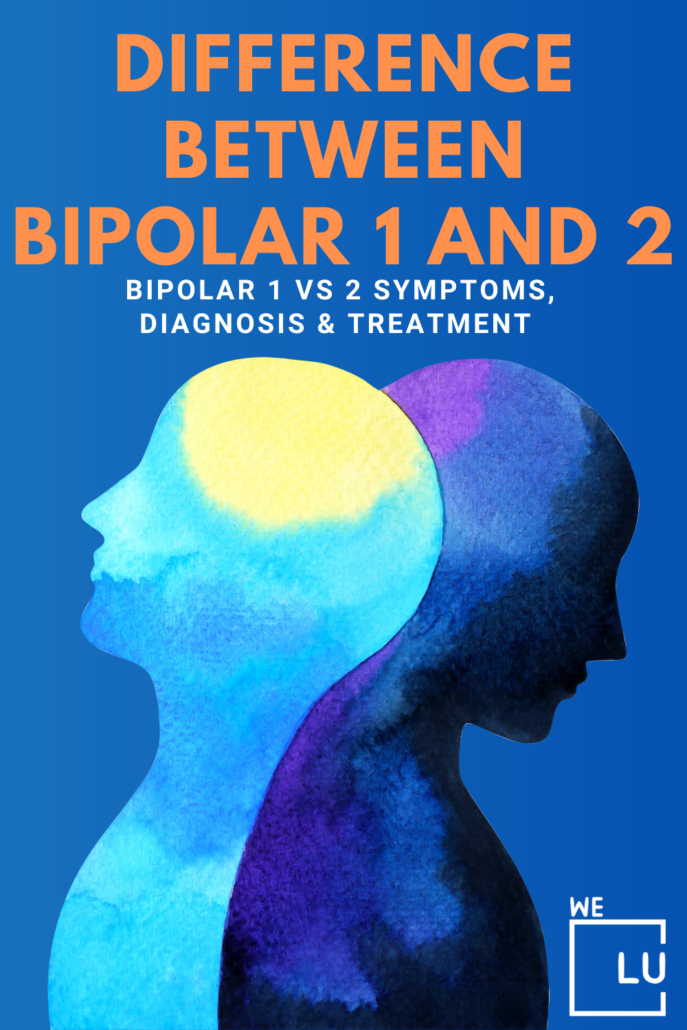
Bipolar disorder is a serious mental health condition. It changes your mood a lot. These mood changes aren’t just normal ups and downs. Many people don’t know that bipolar illness comes in different forms. Being able to tell the difference between bipolar disorders can help you understand your symptoms. We Level Up FL can help you understand the difference between bipolar 1 and 2 and get you the right care if you aren’t sure about your diagnosis.
Bipolar I and bipolar II are both types of mood disorders. One of them is going from having a lot of energy to feeling bad. We call these mood episodes. Even though mania and sadness share some features, the severity and pattern of each are different. Mental health workers can make a safer and more effective treatment plan if they know the difference between bipolar 1 and 2.
This guide explains the key bipolar 1 vs bipolar 2 differences, offers a clear bipolar disorder types comparison, and breaks down mania vs hypomania explained in simple terms.
Table of Contents
What Is a Bipolar Disorder?
One of the many mood disorders that can interfere with emotional equilibrium is bipolar disorder. People who have bipolar disorder go through mood swings that include very high and very low points. The high periods are called mania or hypomania. The low periods are called depression.
BPD comes in a number of different forms. Bipolar 1 disorder and bipolar II disorder are the most common types of bipolar disease. Mood swings happen in different ways for each type. Bipolar disorder is not a flaw in your nature.
It is a disorder that alters how brain chemicals function. Many bipolar people live calm, healthy lives with the right care.
Learn More:
- Is Bipolar a Personality Disorder? BPD vs. Bipolar
- 4 Common Bipolar Symptoms in Men, Signs, Tips, & Treatment
- Bipolar Disorder Medication, 8 Side Effects, and Effective Treatment
- Bipolar Schizophrenia, What’s the Difference? Bipolar vs. Schizophrenia Symptoms and Signs.
- Understanding How a Bipolar Person Thinks. What Does Bipolar Feel Like? Signs and Symptoms of Bipolar Disorder
- Understanding Bipolar Psychosis. Bipolar with Psychosis Symptoms, Cause, and Treatment.
- Bipolar Disorder Therapies. Different Types of Effective Therapy for Bipolar Disorder
- ADHD and Bipolar Symptoms and Signs. Differences Between ADHD vs Bipolar in Adults vs Children, Diagnosis & Treatment.
- Understanding Rapid Cycling Bipolar Disorder. Symptoms, and Effective Treatments.
- Bipolar Symptoms In Women. Signs, Symptoms and Tips
Get Help. Get Better. Get Your Life Back.
Searching for Accredited Dual Diagnosis Mental Health Centers Near You?
Even if therapy failed previously, or are in the middle of a difficult crisis, we stand ready to support you. Our trusted behavioral health specialists will not give up on you. When you feel ready or just want someone to speak to about counseling alternatives to change your life call us. Even if we cannot assist you, we will lead you to wherever you can get support. There is no obligation. Call our hotline today.
FREE 24/7 Dual Diagnosis Mental Health Services HotlineWhat Is Bipolar 1 Disorder?
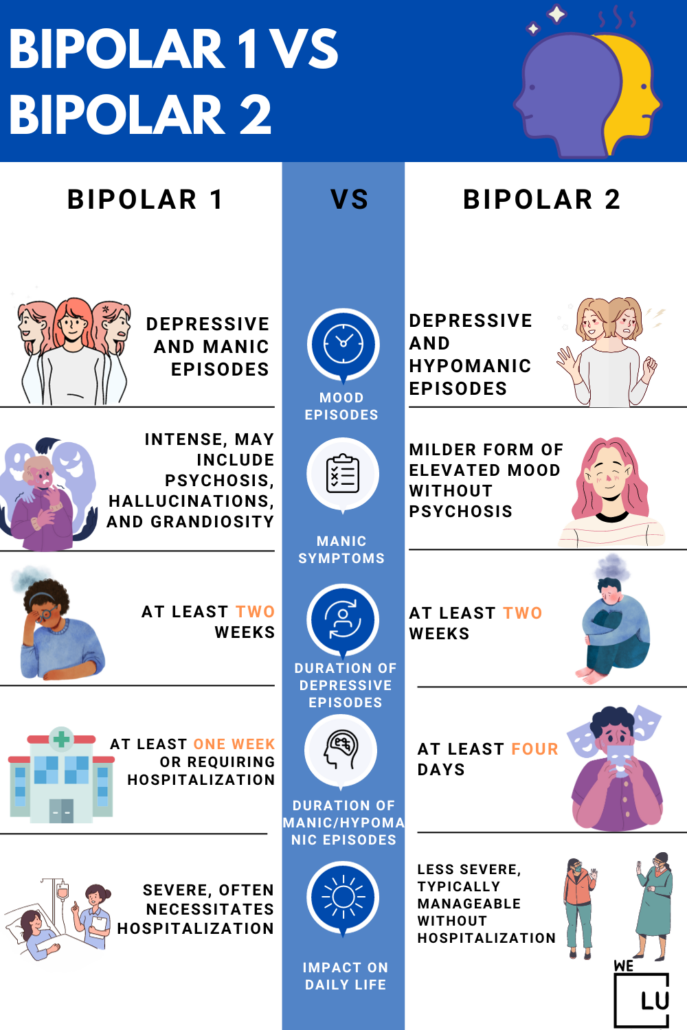
Bipolar 1 disorder includes at least one full manic episode. A manic episode is a period of very high energy and elevated mood.
During mania, a person may:
- Sleep very little
- Talk very fast
- Feel extremely confident
- Take risky actions
- Have racing thoughts
Manic symptoms can get very bad. There may be times when signs of madness show up. This means that someone could lose touch with the real world. You might need to go to the hospital to stay safe. People with bipolar 1 may also feel depressed.
On the other hand, a depressive period is not needed to figure it out. Having full-blown hyper episodes is what makes someone bipolar 1.
What Is Bipolar 2 Disorder?
Hypomania and major depression are part of bipolar 2 illness. Hypomania is not as bad as mania. It comes with a lot of energy and a good mood, but it doesn’t usually cause much trouble. People with bipolar II disorder usually have depressive episodes that last longer and are stronger than hypomanic episodes.
This is when a lot of people get help, not when they are hypomanic. Some people with hypomania may not be easy to spot because they may think they are doing something good or helpful. But if you don’t treat bipolar II disease, it can still hurt your relationships and work.
Mania vs Hypomania Explained
When clearly stated, the difference between mania and hypomania helps show the real difference between bipolar 1 and 2 disorders. There is a lot of mania. It usually lasts for at least seven days. It might be really bad at school, work, or home. Some people might think they can’t be stopped. They could spend a lot of cash. They could do dangerous things. They might talk too fast for other people to understand.
In the worst situations, psychotic symptoms may show up during manic attacks. Real or imagined things that aren’t true are examples of this. To make sure they are safe, the person may need to be taken to the hospital. Not as bad is hypomania. It’s been going on for four days. Something could make someone feel energetic, creative, or surprisingly happy. Some people might be able to tell the difference. In general, the person can still go about their daily life.
Hypomania does not include psychotic signs. It usually doesn’t need immediate care. Things are mostly different in how bad they are. When you’re hyper, your life gets really bad. It’s clear that hypomania changes things, but it doesn’t usually cause a panic attack. Both of these are different kinds of mood swings. The people who work in mental health need to help with both.

End the Emotional Pain. Get Your Life Back.
Feeling Depressed, Anxious or Struggling with Mental Health Illness? Get Safe Comfortable Mental Health Dual Diagnosis High-Quality Therapy From Counselors That Care. Begin Your Recovery Now.
Hotline (855) 940-6125Key Bipolar 1 vs Bipolar 2 Differences
There are key differences between bipolar 1 and bipolar 2 that help doctors make the right diagnosis. For bipolar 1, you need at least one full hypomanic episode. For someone to have bipolar 2 disorder, they must have at least one hypomanic episode and one major depressive episode. For people with Bipolar 1, excitement might be the most dangerous sign. When someone has Bipolar 2, sadness is often the most upsetting thing.
A comparison of the different types of bipolar disease also shows that Bipolar 1 can have psychotic symptoms during manic episodes. Psychosis is not part of bipolar 2. How people get care is another big difference. Due to risky behavior, people with Bipolar 1 may need to go to care while they are manic. People with Bipolar 2 often get help when they are sad.
These types of bipolar diagnoses help doctors figure out how to treat mania. Depending on the type, treatment methods and medications may differ. Knowing about these mood disorders helps ensure the care you receive is targeted and effective.
First-class Facilities & Amenities
World-class High-Quality Mental Health Services & Behavioral Health Substance Abuse Treatment
Rehab Centers TourRenowned Mental Health Centers. Serene Private Facilities. Inpatient Rehab Programs Vary.
Mental Health Helpline (855) 940-6125Proven recovery success experience, backed by a Team w/ History of:
15+
Years of Unified Experience
100s
5-Star Reviews Across Our Centers
10K
Recovery Successes
- Comprehensive Dual-Diagnosis Treatment
- Complimentary Family & Alumni Programs
- Coaching, Recovery & Development Events
- Comfortable Onsite Medical Detox Center
Symptoms of Bipolar Disorder
Each phase has its own unique set of symptoms.

Symptoms of Mania
- High energy
- Little need for sleep
- Rapid speech
- Racing thoughts
- Risky behavior
- Inflated self-confidence
Symptoms of Depression
- Deep sadness
- Loss of interest
- Low energy
- Changes in appetite
- Feelings of guilt
- Hopeless thoughts
These mood swings might recur. For some people, the time between seizures is very stable.
Causes of Bipolar Disorder
No one knows for sure what caused it. Several things, however, do play a part. Chemistry in the brain is important. Mood control is affected by neurotransmitter imbalances. Genetics can also raise the risk. If someone close to you has bipolar illness, the chances are higher.
Mood episodes can be triggered by stressful life events. Trauma and drug use may make symptoms worse. Bipolar disorder is not brought on by vulnerability. It is a medical problem that requires treatment by a doctor.
Treatment for Bipolar Disorder
Treatment for bipolar disorder is long-term. The goal is to reduce mood swings and prevent future episodes.
At We Level Up FL, treatment options include:
- Psychiatric evaluation
- Medication management
- Individual therapy
- Cognitive Behavioral Therapy
- Residential mental health treatment
- Partial Hospitalization Programs
- Intensive Outpatient Programs
- Dual diagnosis treatment for substance use
Mood stabilizers are often found in medicines. Some medicines may cause side effects. Mental health workers keep a close eye on things to make sure that treatment changes are safe.
Therapy helps people figure out what sets them off and learn how to deal with it. Support groups also help people bond and understand each other. People with bipolar illness and substance abuse are treated together in dual diagnosis care. It makes things more stable in the long run.
World-class, Accredited, 5-Star Reviewed, Effective Mental Health Dual Diagnosis Programs. Complete Integrated Inpatient Rehab with Free Post Discharge Therapy Planning.
CALL (855) 940-6125End the Emotional Pain Rollercoaster. Gain Stability & Happiness Through Recovery Treatment. Start Mental Health Counseling Today. Get Free No-obligation Guidance by Behaviroal Health Specialists Who Understand Mental Health Recovery.
Why Choose We Level Up FL
When looking into the difference between bipolar 1 and 2, picking the right treatment place is important. Full evaluations are done by licensed mental health workers at We Level Up FL. We talk about the signs of bipolar disorder and addiction, the history of mood swings, and the things that put people at risk.
We make plans that are unique for each client. Residential care gives people a safe place to get back on their feet. You can get organized help and a lot of freedom with partial hospitalization and inpatient programs.
If there is also an addiction, dual diagnosis care takes care of both problems at the same time. Our main goals are long-term healing, security, and a good quality of life.
Living With Bipolar Disorder
Many people with bipolar disorder live stable lives when they get regular care. Healthy sleep habits lower the chance of return. Well-balanced meals are good for brain health. Managing stress makes it less likely that you will have a new mood episode.
Family therapy makes it easier for people to talk to each other. Support groups help people feel less alone. It takes time to recover. But steady care makes it possible to get better.
When to Seek Help
Seek professional help if:
- Mood swings disrupt daily life.
- Risky behavior increases
- Depression lasts more than two weeks.
- Psychotic symptoms appear
- Thoughts of self-harm occur.
Early intervention improves outcomes.
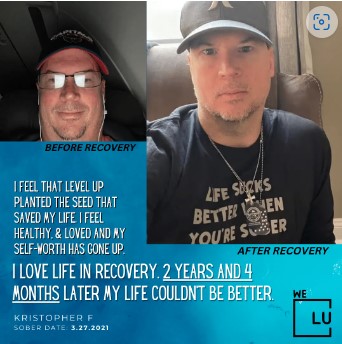
Experience Transformative Recovery at the We Level Up Treatment Center.
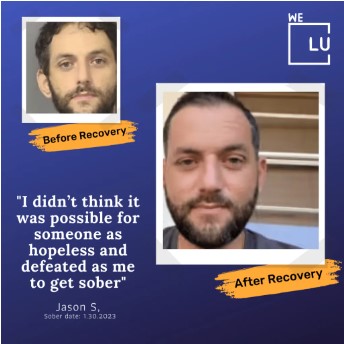
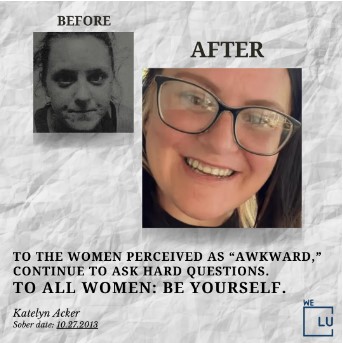
See our authentic success stories. Get inspired. Get the help you deserve.
Start a New Life
Begin with a free call to a behavioral health treatment advisor. Learn more about our dual-diagnosis programs. The We Level Up treatment center network delivers recovery programs that vary by each treatment facility. Call to learn more.
- Personalized Care
- Caring Accountable Staff
- Comfortable Amenities
- Licensed & Accredited
- Renowned w/ 5-Star Reviews
We’ll Call You
Frequently Asked Questions
What is the difference between bipolar 1 and 2?
Bipolar 1 includes full mania. Bipolar II disorder includes hypomania and major depression.
What are the main bipolar 1 vs bipolar 2 differences?
The main difference is severity. Bipolar 1 includes intense mania. Bipolar 2 includes milder hypomania.
How is mania vs hypomania explained?
Mania is severe and may require hospitalization. Hypomania is milder and does not usually require hospital care.
What are common bipolar diagnosis types?
Common bipolar diagnosis types are Bipolar 1 and bipolar 2.
How does We Level Up FL offer help?
We Level Up FL provides psychiatric care, therapy, residential treatment, outpatient programs, and dual diagnosis support.
Can bipolar disorder be managed?
Yes. With medication, therapy, and support groups, many people maintain stability.
Take a Step Forward
It can be hard to live if you don’t know the difference between bipolar 1 and 2. Mood changes can make you feel lost or worn out. You might not understand why your mood changes so quickly. Don’t forget that answers make you feel better. If you are diagnosed with bipolar disorder and get the right care, you can be stable.
At We Level Up FL, we provide structured care that supports real change. Call (855) 940-6125 today. Let this be the moment you choose clarity over chaos and support over silence. You deserve balance, peace, and hope.