

Life can sometimes bring sudden and painful changes. Losing a job, ending a relationship, or facing a major life problem can cause strong emotional stress. When these stressful events lead to deep sadness and emotional struggle, a person may experience situational depression.
Situational depression is a short term type of depression that happens after a difficult life event. It is also known as stress induced depression or adjustment related depression. A person may feel sad, overwhelmed, or unable to cope with daily life for a period of time.
Understanding the signs of situational depression can help people recognize what they are feeling and find support sooner. With the right care and healthy coping tools, many people move toward situational depression recovery and begin to feel better again.
What Is Situational Depression?
Situational depression is a form of depression that happens after a stressful life event. It often appears when someone struggles to adjust to a sudden change or emotional loss. Mental health professionals sometimes call this condition adjustment disorder depression symptoms.
A person with situational depression may feel sad, worried, or emotionally drained after a major life challenge. These feelings can make daily life feel heavy and difficult. Simple tasks may feel overwhelming when emotional stress becomes too strong.
Unlike long-term depression disorders, situational depression usually connects to a specific event. When the person learns healthy ways to cope and receives support, the symptoms often improve over time.
How Situational Depression Is Different from Other Types
Situational depression has a starting point you can point to, like a job loss or family problem. That makes it feel like stress induced depression. Regular clinical depression can happen without a big trigger and lasts much longer.
Adjustment disorder depression symptoms usually fade in a few months as life settles. Other depression types might need care for years. Situational depression often responds well to talking about the problem and making small life changes. Understanding this helps you see hope. It means the sadness links to something outside you, and fixing or accepting that part can bring relief.
Common Reactive Depression Symptoms
Reactive depression symptoms can feel strong and make every day tough. Here are some you might notice after a hard event.
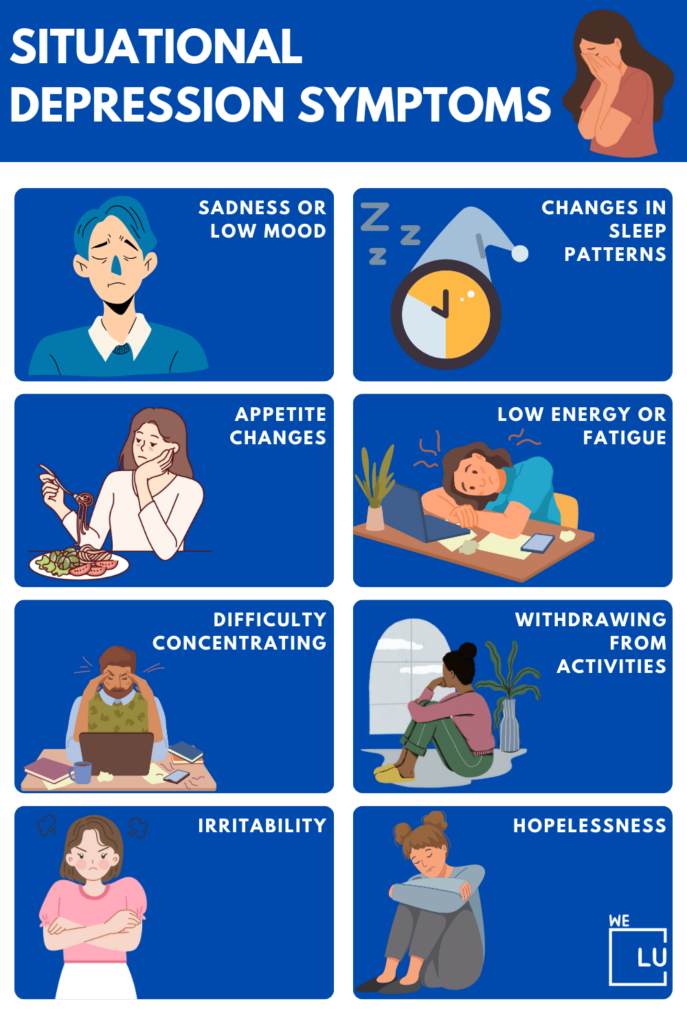
You feel very sad or empty inside most of the time. Tears come without much reason. You lose joy in friends, hobbies, or even simple things like watching TV. Sleep goes wrong. Some people stay awake worrying all night. Others sleep too much to hide from the pain.
Eating changes happen too. You might eat more comfort food and gain weight, or lose your appetite and feel weak. These symptoms show your body is reacting to big stress. They are normal in this situation, but they do not have to stay forever.
Skip To:
Learn More:
- Learn How to Cope with Depression. 10 Ways to Cope with Depression.
- Are There Stages of Depression? Understanding Symptoms, Causes, and Effective Treatments
- What Is Mild Depression? Symptoms and Treatment
- What is Crippling Depression? Learning How To Deal With Crippling Depression
- Atypical Depression. What Is It? Symptoms and Treatment
- Manic Depression Vs Bipolar. Are They The Same?
- Unipolar Depression Definition, Symptoms, and Treatment
- What Does Depression Feel Like? Symptoms and Early Signs
- Signs Of Depression In Women, Symptoms and Treatment
- Effective Depression Treatment, Depressive Disorder Symptoms, Types, and Causes
Am I Depressed? Free Quiz
Take the quiz below to explore if you may be experiencing symptoms associated with depression. This quiz is not a substitute for professional diagnosis, so seek guidance from a mental health professional for an accurate assessment.
Emotional and Mental Signs of Adjustment Disorder Depression Symptoms
Your thoughts and feelings turn heavy and dark. You often feel hopeless, like good things will never come back. Guilt hits you hard, even when the event was not your fault. You worry a lot and cannot stop thinking about what went wrong. Focusing on work, school, or talking with people feels very hard. Your mind races or feels foggy. You get irritated or angry more easily than before.
These emotional signs hurt a lot inside. They make you want to stay alone. But sharing with someone who listens kindly starts to make the weight feel lighter. You deserve to feel understood.
Get Help. Get Better. Get Your Life Back.
Searching for Accredited Dual Diagnosis Mental Health Centers Near You?
Even if therapy failed previously, or are in the middle of a difficult crisis, we stand ready to support you. Our trusted behavioral health specialists will not give up on you. When you feel ready or just want someone to speak to about counseling alternatives to change your life call us. Even if we cannot assist you, we will lead you to wherever you can get support. There is no obligation. Call our hotline today.
FREE 24/7 Dual Diagnosis Mental Health Services HotlinePhysical Signs from Stress-Induced Depression
Stress induced depression affects your body as well as your mind. Many people feel these changes first. You get headaches that keep coming back. Your stomach hurts with pain, bloating, or feeling sick. Muscles in your neck, back, or shoulders stay tight and sore. You feel tired all the time, even after a full night of sleep.
These body signs come from stress hormones running high. When you work on your mood, the physical pains usually get better too. Talk to a doctor about them. Tell the doctor how stressed you feel. It helps them give the best advice.
Suppose you or someone you know is dealing with situational depression, which affects their daily functioning. In that case, We Level Up Florida Mental Health Treatment Center provides personalized care with a team of experienced professionals. Begin your journey towards better health by taking the first step towards healing. Get help. Call We Level Up FL now. Each call is free and confidential.
