

Free Derealization Test: Depersonalization Disorder Quiz
If you’ve noticed any symptoms, this derealization test can assist you in comprehending your condition.
Editor Yamilla Francese
Clinically Reviewed by Lauren Barry, LMFT, MCAP, QS
Medically Reviewed by Ali Nikbakht, PsyD
Updated on June 10, 2026 — Editorial Policy | Research Policy
Derealization Test: Signs, Causes, and When to Seek Help
Sometimes, do you think the world isn’t real? Does the world seem strange, far away, or like a dream? It can be scary and hard to understand these thoughts. Many people find it hard to explain them. It is possible that these symptoms are caused by a mental illness. A derealization test can help you figure this out. If you often feel like you’re not in touch with reality, the help at We Level Up FL can help you get back on track.
When you’re stressed, you might feel disconnected for a short time. They may, however, be signs of something deeper if they occur frequently or for a long time. Getting clear and feeling better can start with taking a derealization test. This guide explains what derealization is, how to test for it, and the kinds of treatments available.
Ready to get started? Call (888) 861-4486 or email verifyadmissions@welevelup.comtoday. A better life is waiting for you.
Table of Contents
Do I Have Depersonalization Derealization Disorder Test?
Take our “Do I Have Depersonalization-Derealization Disorder Test”

Welcome to the Derealization Test - Depersonalization Test. This assessment is designed to help you gain insights into your perceptual experiences and feelings of detachment from your surroundings or sense of self. Please note that this test is not a diagnostic tool and should not be used as a substitute for professional medical advice.
*By taking this free quiz, you may obtain your results online and in your email box. You’ll have the opportunity to opt-in to learn more about your symptoms, talk to a mental health consultant and join our newsletter. Rest assured your information is private and confidential. Results, consultations and assessment are provided without any cost to you and without any obligation. If you do not wish to provide your contact information, you may omit it during your quiz. Thank you for opting in and participating. To you best of health.
What Causes Depersonalization-Derealization Disorder?
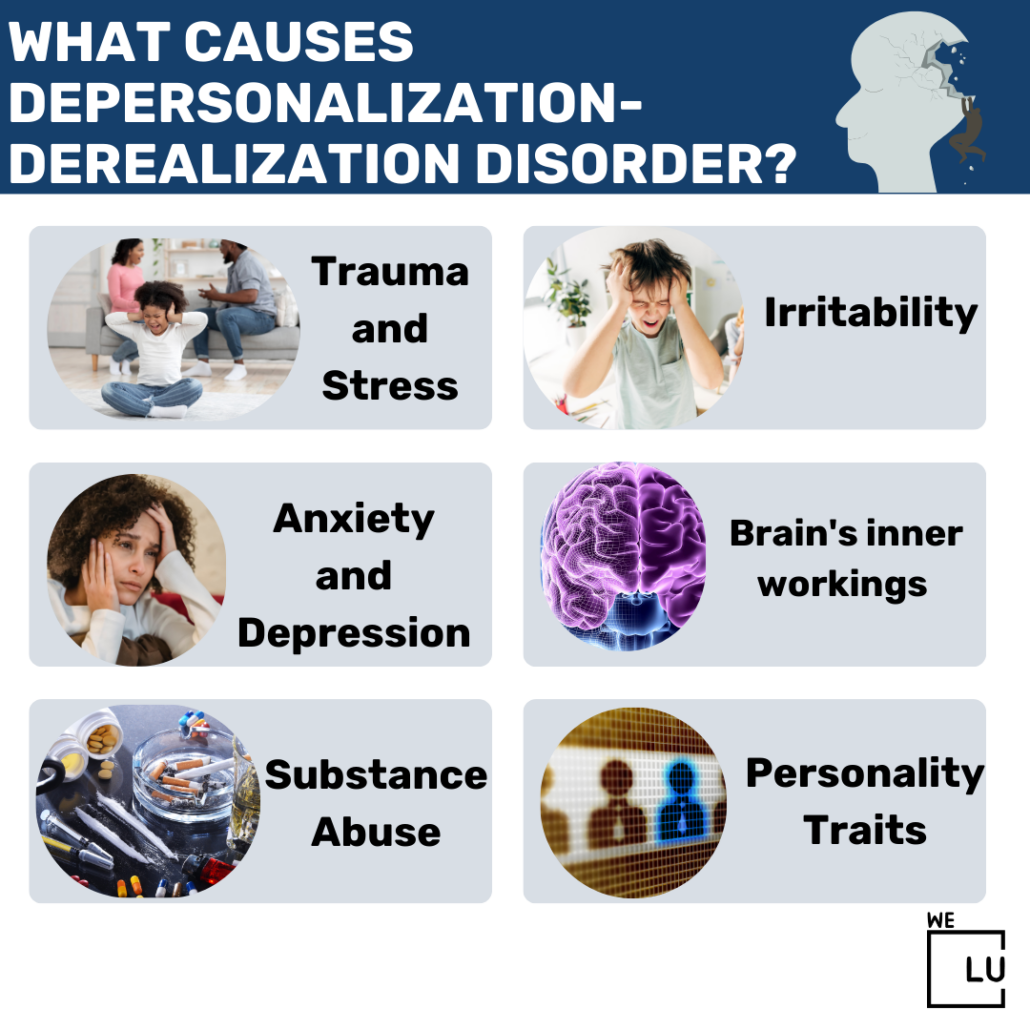
Depersonalization-Derealization Disorder (DDD) is a complex and relatively rare dissociative disorder characterized by persistent feelings of depersonalization (a sense of detachment from oneself) and derealization (a feeling of unreality or detachment from one’s surroundings). The exact cause of DDD is not fully understood, but several factors may contribute to its development:
- Trauma and Stress: One of the primary triggers for depersonalization-derealization disorder is exposure to severe trauma or prolonged stress. This can include experiences like physical or emotional abuse, accidents, natural disasters, combat, or other life-threatening events. These traumatic experiences can overwhelm a person’s coping mechanisms, leading to dissociative symptoms as a way of psychological self-protection.
- Anxiety and Depression: DDD often coexists with anxiety disorders, depression, or other mental health conditions. When a person experiences chronic anxiety or depression, the mind may use depersonalization and derealization as a coping mechanism to numb emotional distress or escape from overwhelming negative feelings.
- Substance Abuse: Drug and alcohol abuse can induce transient episodes of depersonalization-derealization. In some cases, prolonged substance abuse can exacerbate dissociative symptoms and even contribute to developing DDD in susceptible individuals.
- Brain Mechanisms: Studies suggest that disruptions in specific brain areas, such as the prefrontal cortex, temporal lobes, and limbic system, may play a role in the manifestation of depersonalization-derealization disorder. These brain regions are associated with self-awareness, emotional regulation, and perception of reality.
- Personality Traits: Certain personality traits, such as a tendency towards introspection and high anxiety or neuroticism, may increase the likelihood of experiencing dissociative symptoms.
- Childhood Trauma: Adverse childhood experiences, particularly emotional neglect or abuse, can significantly impact a person’s psychological development and increase the risk of developing dissociative disorders later in life.
It is essential to note that depersonalization-derealization disorder is a complex condition, and its development is likely influenced by a combination of genetic, biological, environmental, and psychological factors. Individuals experiencing persistent symptoms of DDD should seek professional help from mental health specialists, such as psychiatrists or psychologists, to receive an accurate diagnosis and appropriate treatment. Therapy, including cognitive-behavioral therapy (CBT) and dialectical behavior therapy (DBT), along with medication in some cases, can be effective in managing and alleviating the symptoms of DDD.
Take A Derealization Symptoms Test For Adults
If you are an adult and suspect that you may be experiencing derealization symptoms, taking a derealization symptoms test can be a helpful step in understanding your condition. Such a test can provide you with valuable insights and potentially indicate whether you are experiencing symptoms associated with derealization.
The derealization symptoms test typically consists of a series of questions designed to assess your feelings and perceptions about your surroundings, yourself, and your emotions. The questions may inquire about experiences such as feeling disconnected from your body, perceiving the world as unreal or dreamlike, and experiencing distortions in the perception of your surroundings. It may also explore any emotional numbness or dissociative feelings you may have encountered.
This test can be found online, but it is essential to ensure that you use a reliable and validated assessment tool. Additionally, while the test can provide valuable information, it is not a substitute for a professional evaluation by a mental health expert.
If you score high on the derealization symptoms test or are experiencing distressing symptoms, it is crucial to seek help from a qualified mental health professional. A psychiatrist or psychologist can conduct a comprehensive assessment, determine if you have depersonalization-derealization disorder or any other underlying condition, and suggest appropriate treatment options.
Remember, the aim of the test is to guide you toward seeking appropriate support and understanding your experiences better. Seeking professional help can aid in managing your symptoms and improving your overall well-being. Mental health conditions like derealization are treatable, and with the right support, many individuals experience significant relief from their symptoms.
Once you have finished responding to the Derealization Test, click “submit” and patiently await your results. Sharing your test results with a professional healthcare counselor to gain valuable insights. If you require assistance, don’t hesitate to call the We Level Up treatment center advocates for a free depersonalization derealization disorder evaluation and consultation. Rest assured that there is no obligation attached to this consultation, and your call will remain confidential and free of charge. Your well-being is our priority, and we are here to offer guidance and resources during this time.
Get Help. Get Better. Get Your Life Back.
Searching for Accredited Dual Diagnosis Mental Health Centers Near You?
Even if therapy failed previously, or are in the middle of a difficult crisis, we stand ready to support you. Our trusted behavioral health specialists will not give up on you. When you feel ready or just want someone to speak to about counseling alternatives to change your life call us. Even if we cannot assist you, we will lead you to wherever you can get support. There is no obligation. Call our hotline today.
FREE 24/7 Dual Diagnosis Mental Health Services HotlineWhat Is Derealization?
It is possible to become disconnected from reality. When your mind cuts off from your surroundings, this is called dissociation. The world may feel unreal, fuzzy, or far away during derealization. It might feel like life is being shown to you on a screen. It may seem like sounds are far away. People may look strange. It’s okay for places you know to feel strange.
These feelings are known as signs of reality detachment. They may last a short time or a long time. Some people feel them when they have a panic attack. Some feel them every day. Psychosis is not the same as derealization. Most people who have derealization are aware that something is wrong. They know the world is real, even though it doesn’t seem real.
What Is a Derealization Test?
A derealization test is a screening tool. It asks questions about your experiences. The goal is to see whether your symptoms match the signs of dissociation.
It is important to understand that a screening tool is not a diagnosis. A licensed mental health provider must complete a full evaluation.
A dissociation screening test may ask about:
- How often do you feel detached from reality?
- How long do episodes last
- Whether stress or trauma triggers symptoms
- How symptoms affect work, school, or relationships
Some tools are called derealization-depersonalization quizzes because they measure both types of dissociation.
World-class, Accredited, 5-Star Reviewed, Effective Mental Health Dual Diagnosis Programs. Complete Integrated Inpatient Rehab with Free Post Discharge Therapy Planning.
CALL (855) 940-6125End the Emotional Pain Rollercoaster. Gain Stability & Happiness Through Recovery Treatment. Start Mental Health Counseling Today. Get Free No-obligation Guidance by Behaviroal Health Specialists Who Understand Mental Health Recovery.
Derealization vs Depersonalization
Depersonalization and derealization are connected but not the same. The way you see the world changes when you’re derealized. The way you feel about yourself changes when you depersonalize. You might feel like you’re not in touch with your body during depersonalization.
Thoughts of being watched from outside may come to mind. A lot of the time, a derealization depersonalization quiz will check for both. Having both of these things happen can be caused by a lot of stress, an anxiety disorder, a traumatic event, or drug use.
Common Reality Detachment Symptoms
Reality detachment symptoms can feel intense. They often increase during stress.
Common symptoms include:
- Feeling like the world is unreal
- Seeing things as blurry or flat
- Feeling emotionally numb
- Hearing sounds that seem distant.
- Feeling disconnected from people
These signs may make it hard to go about your daily life. Some people avoid social events because they fear having an episode. Some people have trouble at school or work.
First-class Facilities & Amenities
World-class High-Quality Mental Health Services & Behavioral Health Substance Abuse Treatment
Rehab Centers TourRenowned Mental Health Centers. Serene Private Facilities. Inpatient Rehab Programs Vary.
Mental Health Helpline (855) 940-6125Proven recovery success experience, backed by a Team w/ History of:
15+
Years of Unified Experience
100s
5-Star Reviews Across Our Centers
10K
Recovery Successes
- Comprehensive Dual-Diagnosis Treatment
- Complimentary Family & Alumni Programs
- Coaching, Recovery & Development Events
- Comfortable Onsite Medical Detox Center
What Causes Derealization?
A lot of the time, derealization happens because of worry. Dissociation may be a way for the brain to deal with stress. It helps you get away from feelings that are too strong. Anxiety illnesses, panic attacks, traumatic events, and sleep problems are all common reasons for this.
There is a strong link between detachment and post-traumatic stress disorder. Using drugs can also make conditions worse. Drugs and alcohol change the way our brains work. This could make episodes happen more often or last longer.
Derealization can happen at the same time as sadness in some cases. Mental illnesses often happen at the same time.
When Should You Take a Derealization Disorder Test?
You may want to take a derealization disorder test if:
- You often feel detached from your surroundings.
- Episodes last weeks or months
- Symptoms cause fear or panic.
- You avoid activities due to symptoms.
- You have anxiety disorders or a trauma history.
You can learn about trends with screening tools. They also help you figure out when to get help from a professional. Early evaluation helps people heal faster. It may feel harder to deal with problems for a longer time.
Treatment Options
Treatment focuses on the root cause. If anxiety triggers episodes, therapy will target anxiety. If trauma is present, trauma-focused care is essential.
At We Level Up FL, treatment options include:
- Individual therapy focused on anxiety and trauma.
- Cognitive Behavioral Therapy to reduce negative thinking
- Grounding skill training
- Medication management when needed
- Residential mental health treatment
- PHP
- Intensive Outpatient Programs
- Dual diagnosis care for substance use
Techniques for grounding are very helpful. These skills help you focus on the present. As time goes on, events get less intense. If your symptoms are linked to depression or anxiety conditions, you may benefit from taking medicine.
Why Choose We Level Up FL
It’s important to pick the right treatment place. Here at We Level Up FL, we offer organized and caring mental health care. Our team knows how signs of reality detachment can affect daily life. We do more than just an easy test for derealization disorder. We do full evaluations to learn about things like anxiety, trauma, depression, and drug use.
Every client gets a treatment plan that is just right for them. For people with severe symptoms, we offer residential care. For people who need flexible care, we also offer Partial Hospitalization Programs. There is dual diagnosis treatment if there is drug use. Long-term recovery is better when both diseases are treated at the same time. Our goal is for you to once again feel stable, present, and linked.
Ready to get started? Call (888) 606-5120 or email verifyadmissions@welevelup.com today. A better life is waiting for you.
Can Derealization Go Away?
Yes. Treatment helps many people get better. When anxiety is controlled, symptoms often get better. Getting trauma therapy lowers triggers. Brain balance gets better with good sleep.
It takes time to recover. But success is made with regular therapy and planned care. Getting grounded skills makes you feel more confident. You may have fewer bouts and feel less fear over time.
Frequently Asked Questions
What is a derealization test?
It is a screening tool that checks for symptoms of dissociation and reality detachment.
Is a derealization disorder test a diagnosis?
No. It is only a screening tool. A licensed provider must complete a full evaluation.
What does a derealization depersonalization quiz measure?
It measures symptoms of both derealization and depersonalization.
What are common reality detachment symptoms?
Symptoms include feeling like the world is unreal, emotional numbness, and distorted perception.
How does We Level Up FL offer help?
We Level Up FL provides therapy, medication management, residential treatment, outpatient programs, and dual diagnosis care for dissociation and related conditions.
Can a dissociation screening test help with trauma symptoms?
Yes. Many screening tools include questions about trauma and anxiety.

End the Emotional Pain. Get Your Life Back.
Feeling Depressed, Anxious or Struggling with Mental Health Illness? Get Safe Comfortable Mental Health Dual Diagnosis High-Quality Therapy From Counselors That Care. Begin Your Recovery Now.
Hotline (855) 940-6125You Deserve to Feel Present Again
It can be scary and lonely to live with reality separation symptoms. You can think about your own mind. You might not feel close to the people you care about. Know that you can get help for these feelings. A derealization test is only the first step. Real healing begins with professional support.
At We Level Up FL, we provide structured care designed to restore clarity and stability. Call (855) 940-6125 today. Let this be the moment you choose connection over confusion and support over fear. You deserve to feel real again.
Ready to get started? Call (888) 606-5120 or email verifyadmissions@welevelup.com today. A better life is waiting for you.